
Ocean Acidification: How Rising CO₂ Is Reshaping Coral Reefs, Shellfish, and Marine Food Webs
Ocean acidification lowers seawater pH and threatens corals, shellfish, and marine ecosystems.
Share this story
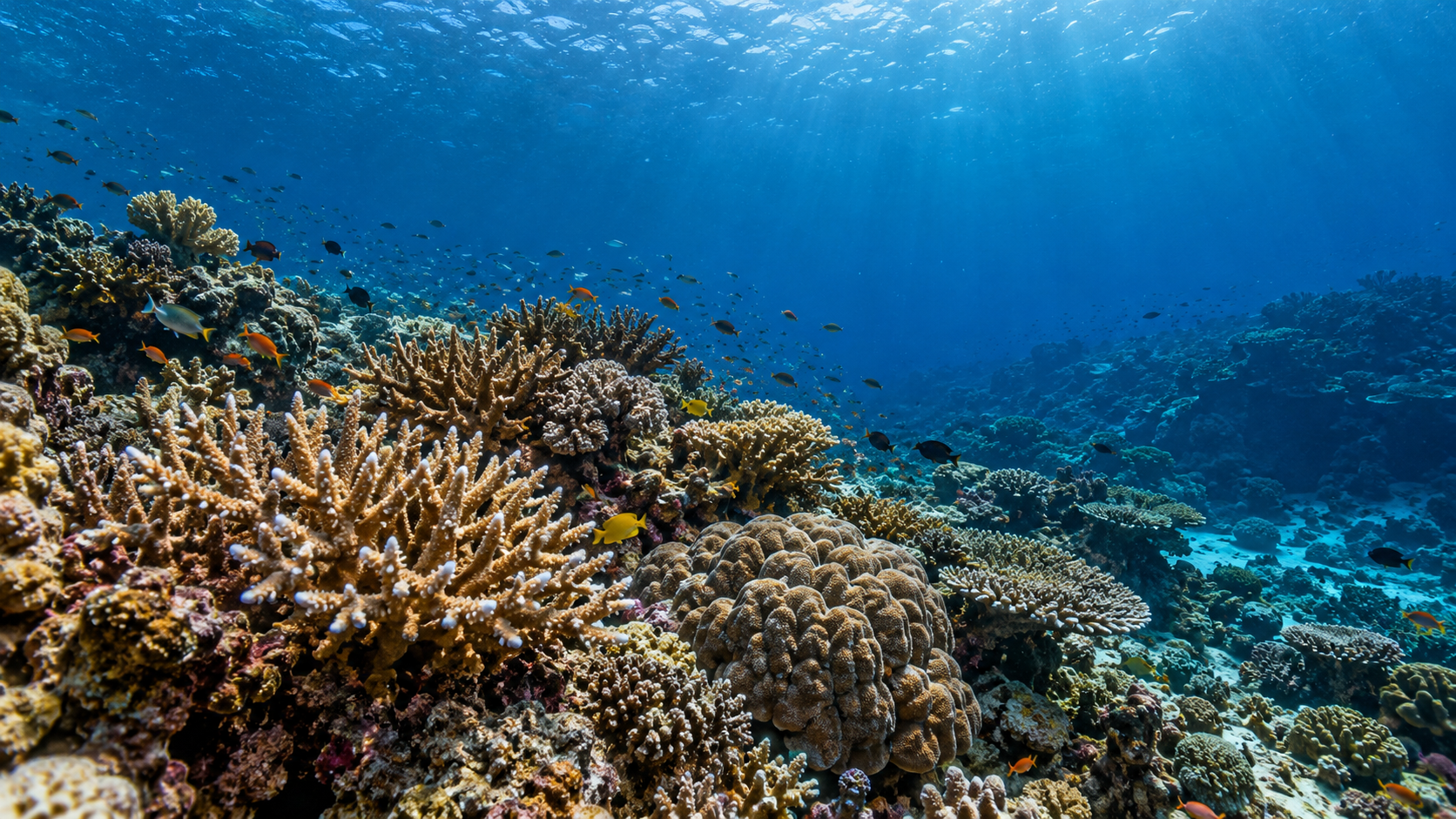
The ocean absorbs a substantial share of atmospheric carbon dioxide, helping to slow global warming. But that service changes seawater chemistry, reducing the availability of carbonate ions that many marine organisms need to build shells and skeletons.
Ocean acidification does not mean that the entire ocean has become acidic. Most seawater remains alkaline. The term describes a long-term decline in pH and an increase in hydrogen-ion concentration.
The Ocean Absorbs Carbon, but Its Chemistry Changes
Since the Industrial Revolution, atmospheric carbon dioxide has risen mainly because of fossil-fuel combustion and land-use change. The ocean has absorbed roughly one quarter of human-caused CO₂ emissions, reducing the amount that remains in the atmosphere. [2]
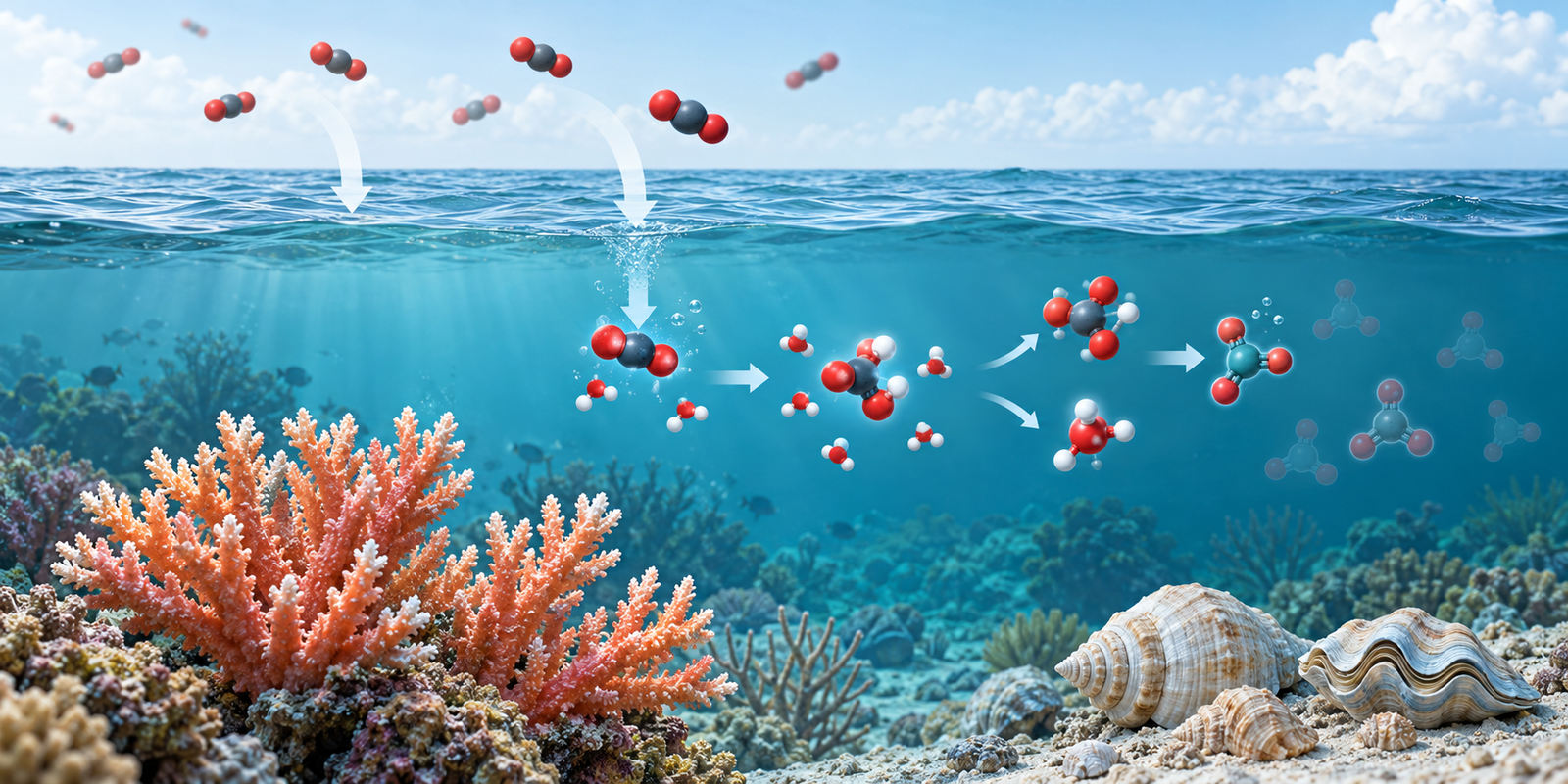
This absorption, however, has a chemical cost. When carbon dioxide dissolves in seawater, it participates in a linked set of reactions known as the carbonate system:
CO₂ + H₂O ⇌ H₂CO₃
H₂CO₃ ⇌ H⁺ + HCO₃⁻
HCO₃⁻ ⇌ H⁺ + CO₃²⁻
This is a simplified representation. Real seawater chemistry is also shaped by temperature, salinity, pressure, nutrients, and the borate buffering system. Still, the overall direction is clear: as more CO₂ enters seawater, the concentration of hydrogen ions increases.
Some of those hydrogen ions combine with carbonate ions, converting them into bicarbonate. As a result, carbonate ions become less available in seawater. [1]
According to NOAA, average global ocean acidity has increased by about 26% over the past 250 years. This figure refers to the increase in hydrogen-ion concentration, not a linear change in pH. Because pH is logarithmic, a seemingly small numerical shift can represent a substantial chemical change. [1]
Why Carbonate Ions Matter to Marine Life
Many marine organisms build shells, skeletons, or structural elements from calcium carbonate, CaCO₃. These include reef-building corals, oysters, mussels, sea urchins, coralline algae, coccolithophores, and some planktonic snails.
Scientists assess the chemical conditions for calcium-carbonate formation using a measure called the saturation state:
Ω = [Ca²⁺][CO₃²⁻] / Ksp
When the saturation state of minerals such as aragonite or calcite declines, conditions become less favorable for building and maintaining calcium-carbonate structures.
This does not mean that every coral, shellfish, or plankton species immediately stops growing. Organisms vary in their ability to regulate internal chemistry, allocate energy, and tolerate natural fluctuations in pH. Their responses also depend on temperature, food availability, life stage, local water chemistry, and genetic variation.
Nevertheless, the reduction in carbonate-ion availability is biologically meaningful. The IPCC concludes with high confidence that ocean acidification affects marine organisms and that lower calcium-carbonate saturation states can reduce net calcification in some shell- and skeleton-forming species. [2][3]
Coral Reefs: A Balance Between Construction and Breakdown
A coral reef is more than a collection of living corals. It is a three-dimensional calcium-carbonate structure that supports biodiversity, food webs, fisheries, and coastal protection.
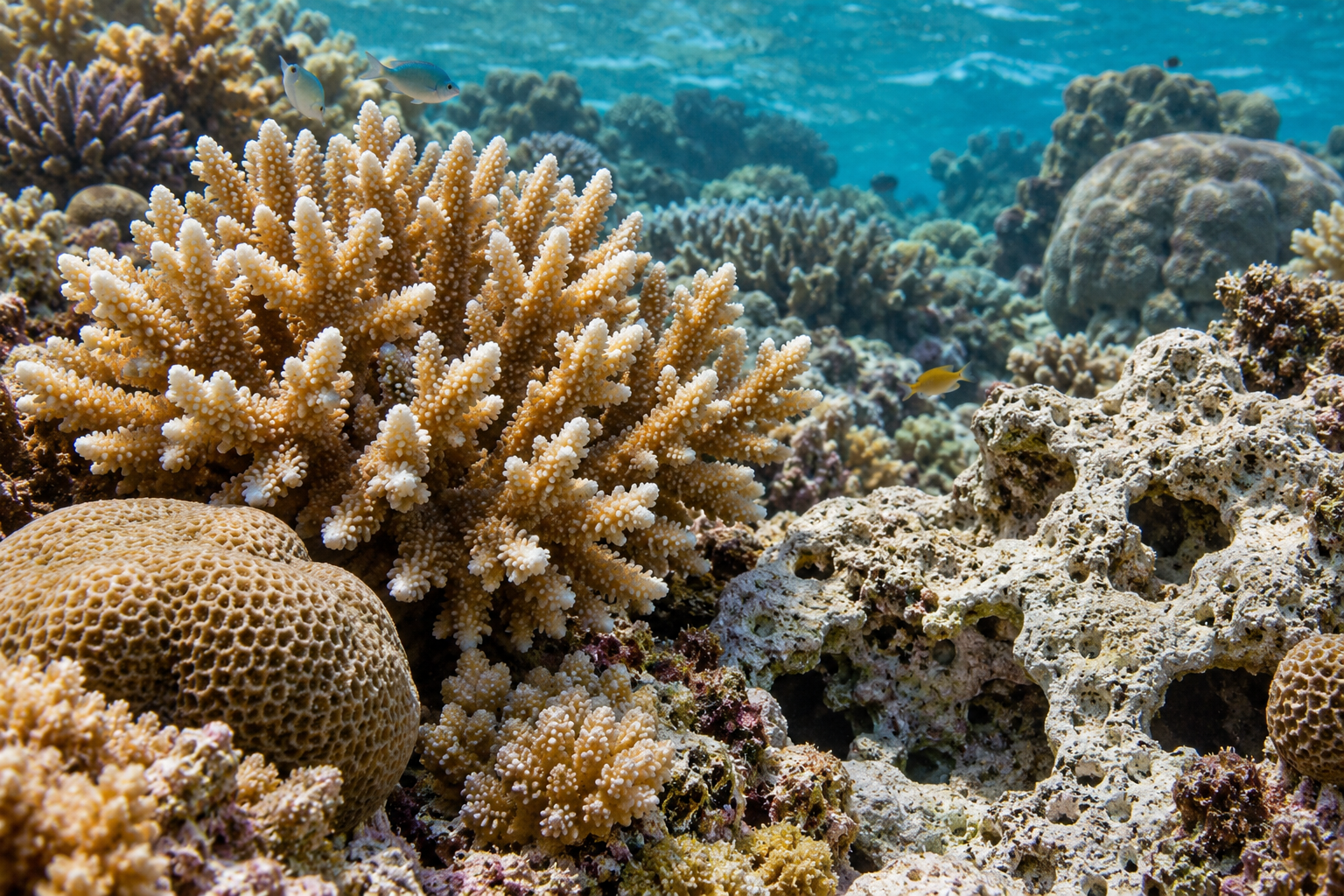
Its future depends not only on how quickly corals and coralline algae add new carbonate material, but also on how rapidly existing material dissolves, erodes, or is broken down by organisms. A reef can therefore lose structural complexity even when some corals remain alive.
In a field experiment on the southern Great Barrier Reef, researchers added CO₂ to seawater flowing over a natural reef community. Under more acidic conditions, net community calcification fell by 34%. [4]
The study is important because it measured an entire reef community rather than a single organism in a laboratory. However, it should not be interpreted as a universal percentage for every reef. The experiment was conducted at one location, over a limited period, and within a specific ecological setting.
Research across five reef sites has also shown that carbonate-sediment dissolution is sensitive to declining aragonite saturation. [5] This means reef resilience must be understood as a balance among calcification, dissolution, bioerosion, and biological recovery.
Beyond Shells: Why Species Do Not Respond in the Same Way
Ocean acidification is sometimes reduced to a simple message: more CO₂ means fewer shells. The underlying trend is important, but the biology is more complex.
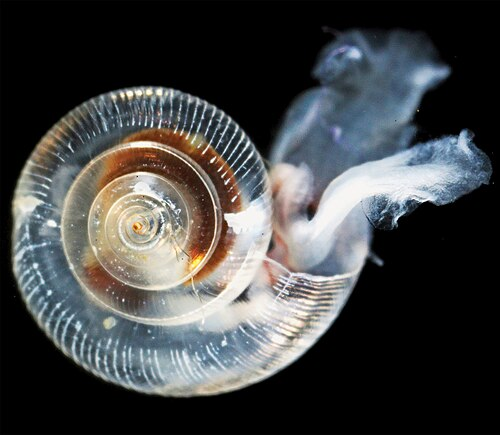
Different species vary in their acid-base regulation, metabolism, habitat, genetic diversity, and exposure to naturally variable conditions. An organism adapted to a highly variable coastal environment may respond differently from one living in more chemically stable waters.
A meta-analysis of 228 studies found average declines in survival, calcification, growth, development, and abundance when marine organisms were considered broadly. However, the magnitude of the response differed substantially among taxonomic groups. Some shellfish larvae appeared especially sensitive, but early life stages were not universally more vulnerable across all groups. [6]
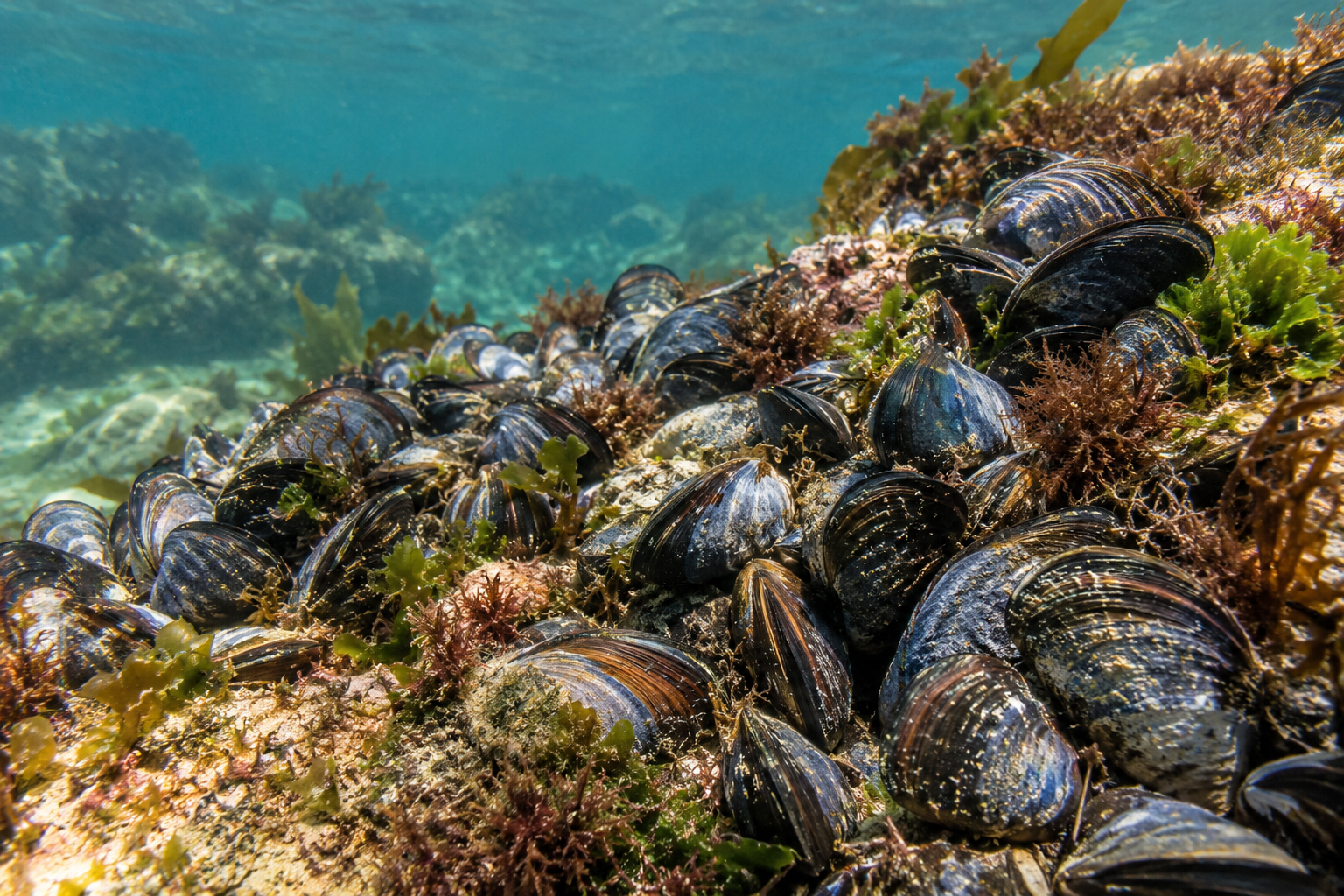
A review of 141 experimental studies on tropical reef-building corals found that lower pH more often affected endpoints related to calcification and reproduction. Yet the authors also identified major research gaps: most experiments focused on adult corals, shallow-water settings, and a relatively limited number of coral ecoregions. [7]
Some macroalgae and phytoplankton species may alter growth or photosynthesis under higher CO₂ conditions, particularly where light and nutrients are not limiting. That does not mean ocean acidification is beneficial to marine ecosystems. The final ecological outcome depends on competition, grazing, warming, nutrient supply, disease, and interactions among species. [3]
Ocean Acidification Is Not the Same as Coral Bleaching
Coral bleaching is primarily associated with heat stress. When water temperatures remain unusually high, corals can lose some of their symbiotic algae, which provide energy and color.
Ocean acidification acts through a different mechanism. It changes carbonate chemistry and can make it more difficult for corals to build and maintain their skeletons.
The two pressures can reinforce one another. Warming increases physiological stress, while acidification can reduce the ability of reefs to rebuild their carbonate framework after disturbance. Pollution, nutrient enrichment, disease, and extreme weather can add further stress.
The scientifically useful question is therefore not which single factor is responsible, but how multiple stressors interact to shape the resilience of a particular species, population, or ecosystem. [3][7]
How Scientists Measure Ocean Change
Measuring pH alone is not enough to describe the ocean carbonate system. International monitoring guidance identifies four central variables:
- pH;
- partial pressure of carbon dioxide, or pCO₂;
- total alkalinity, or TA;
- dissolved inorganic carbon, or DIC.
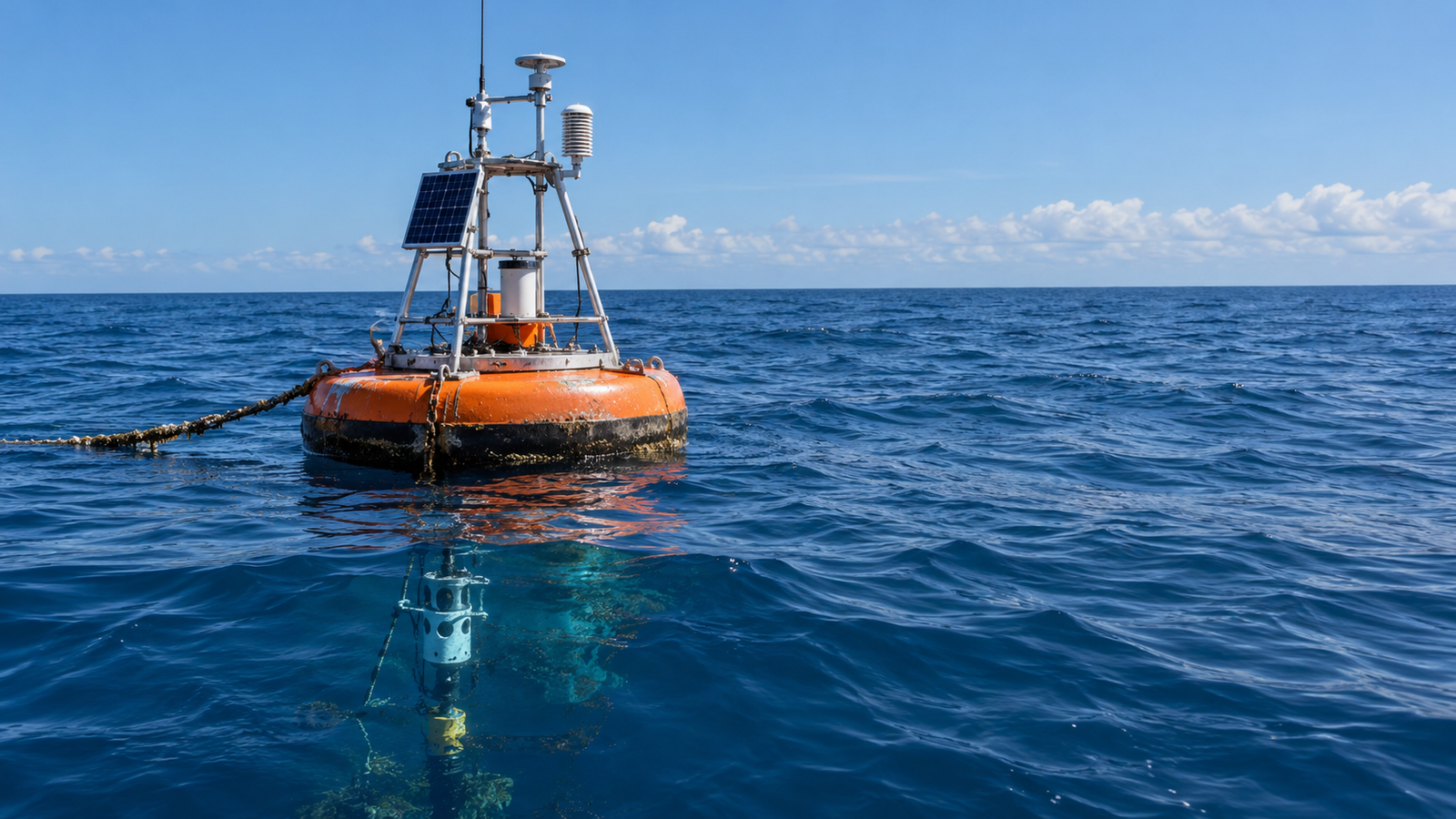
At least two of these variables, together with temperature and salinity, are needed to calculate the remaining properties of the carbonate system and the saturation state of aragonite or calcite. [1][8]
Local conditions matter greatly. In coastal waters, river discharge, heavy rainfall, algal blooms, decomposition of organic matter, and the upwelling of deep water can alter pH on daily or seasonal timescales.
This is why a single global number cannot describe every marine environment. Cold polar waters, for example, can absorb more CO₂, while some upwelling regions naturally bring CO₂-rich deep water to the surface.
Despite this regional complexity, the global trend is clear. The IPCC assesses it as virtually certain that surface ocean waters have acidified globally in response to rising atmospheric CO₂. Since the late 1980s, observed surface-ocean pH in the open ocean has declined by approximately 0.017 to 0.027 pH units per decade. [2]
What Is Established—and What Remains Uncertain
Established: Human-caused CO₂ uptake is changing ocean carbonate chemistry. It lowers pH, reduces the relative availability of carbonate ions, and decreases calcium-carbonate saturation states. These trends are supported by long-term observations. [2][9]
Established, but variable by context: Many calcifying organisms and reef systems face increased risk as carbonate chemistry changes, especially when acidification occurs alongside warming, pollution, and habitat damage. However, the magnitude of the effect cannot be transferred automatically from one species, experiment, or region to the entire ocean. [3][6]
Still uncertain: Scientists are continuing to investigate how quickly populations can adapt across generations, how food webs will reorganize, and how much local conservation can reduce the ecological consequences of global CO₂-driven change.
The Scientific Basis for Action
The root driver of global ocean acidification is rising atmospheric CO₂. Reducing emissions is therefore essential for limiting long-term chemical change in the open ocean.
Local measures still matter. Reducing nutrient pollution, protecting reef habitats, monitoring shellfish-farm waters, and restoring damaged ecosystems can reduce additional stress and support adaptation. But these actions cannot substitute for reducing atmospheric CO₂, because the underlying driver is the global exchange of carbon between the atmosphere and ocean. [2][3]
Conclusion
By absorbing CO₂, the ocean helps limit atmospheric warming. Yet this service changes the chemical balance of seawater.
Ocean acidification is not a problem limited to one species or one reef. It affects the chemical foundation on which many organisms build shells, skeletons, and habitats. Its effects vary by species, life stage, and location, but the risks often increase when acidification combines with warming, pollution, and habitat loss.
The most accurate scientific picture is neither a simplistic catastrophe narrative nor the assumption that marine life will automatically adapt. Ocean acidification is a measurable and ongoing chemical change whose biological consequences require careful monitoring, precise communication, and sustained action.
Frequently Asked Questions
Will the ocean become acidic?
Not in the everyday sense of becoming strongly acidic. Most ocean water will remain alkaline. Acidification means that pH is declining compared with previous conditions, while hydrogen-ion concentration is increasing.
Why does a small pH change matter?
pH is logarithmic. A small numerical decline can correspond to a much larger increase in hydrogen-ion concentration. Carbonate-ion availability and mineral saturation are also important for marine organisms.
Is ocean acidification the main cause of coral bleaching?
No. Coral bleaching is primarily driven by heat stress. Ocean acidification affects corals differently by making calcium-carbonate skeleton formation and maintenance more difficult.
Can local restoration solve the problem?
Local conservation can reduce pollution, nutrient runoff, and habitat damage. These measures are valuable, but they cannot replace global reductions in CO₂ emissions.
Scientific Sources
- NOAA Ocean Acidification Program — What Is Ocean Acidification?
- IPCC AR6 Working Group I, Chapter 5
- IPCC AR6 Working Group II, Chapter 3
- Albright, R. et al. (2018). Carbon dioxide addition to coral reef waters suppresses net community calcification. Nature.
- Eyre, B. D. et al. (2018). Coral reefs will transition to net dissolving before end of century. Science.
- Kroeker, K. J. et al. (2013). Impacts of ocean acidification on marine organisms. Global Change Biology.
- Godefroid, M. et al. (2022). Two decades of seawater acidification experiments on tropical scleractinian corals. Marine Pollution Bulletin.
- Global Ocean Acidification Observing Network: SDG 14.3.1 Methodology
- Jiang, L.-Q. et al. (2019). Surface ocean pH and buffer capacity: past, present and future. Scientific Reports.