
Permafrost: The Hidden Climate Feedback Beneath Frozen Ground
Permafrost thaw releases long-stored carbon, reshapes northern landscapes, and threatens Arctic infrastructure.
Share this story
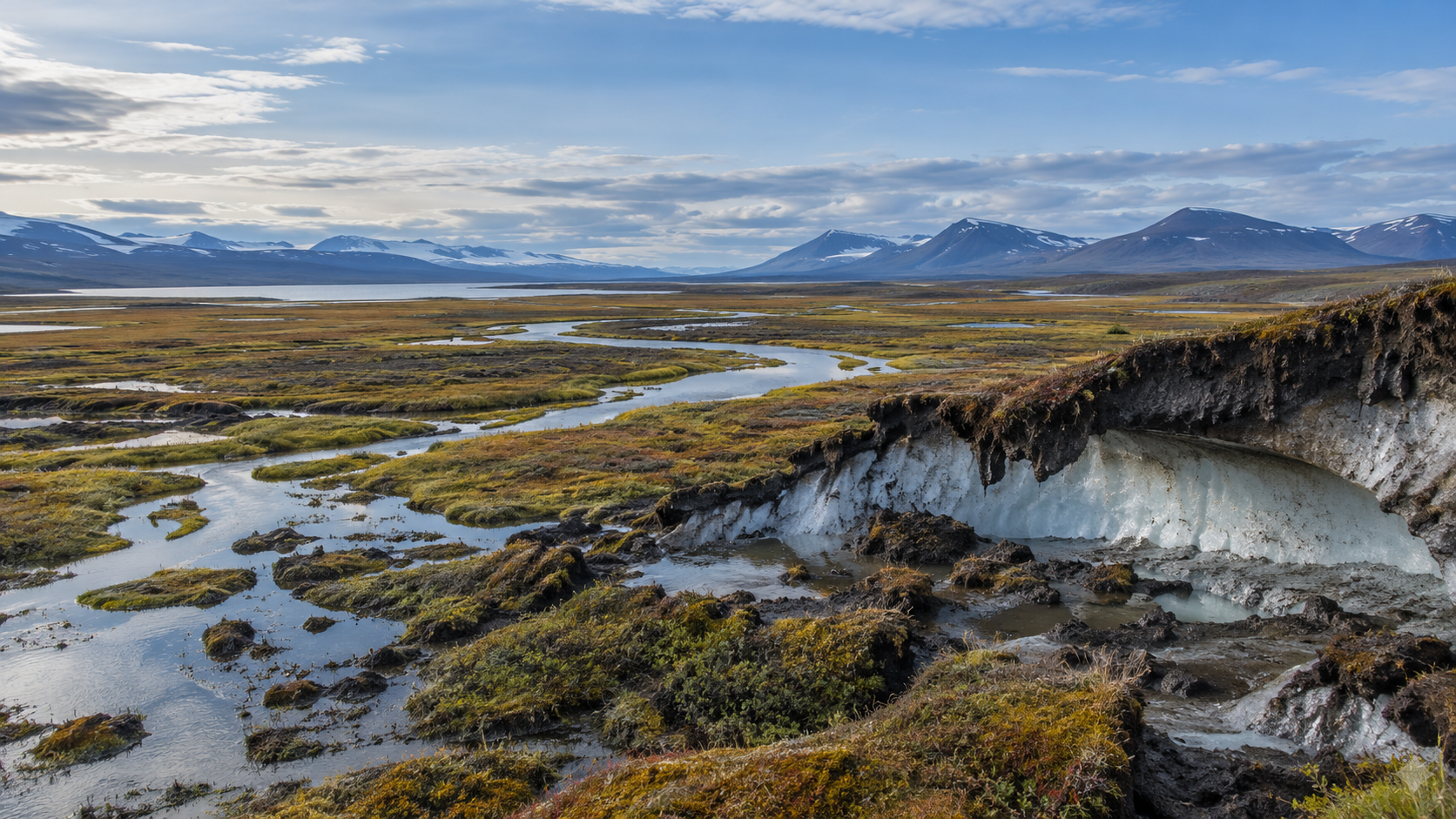
Permafrost is often seen as a feature of distant Arctic landscapes. In reality, it is an important component of Earth’s climate system: a complex combination of frozen soil, rock, ice, water, organic carbon, and human infrastructure. As this environment warms, it affects not only northern landscapes, but also the carbon cycle, ecosystems, roads, building foundations, and climate projections.
What Is Permafrost?
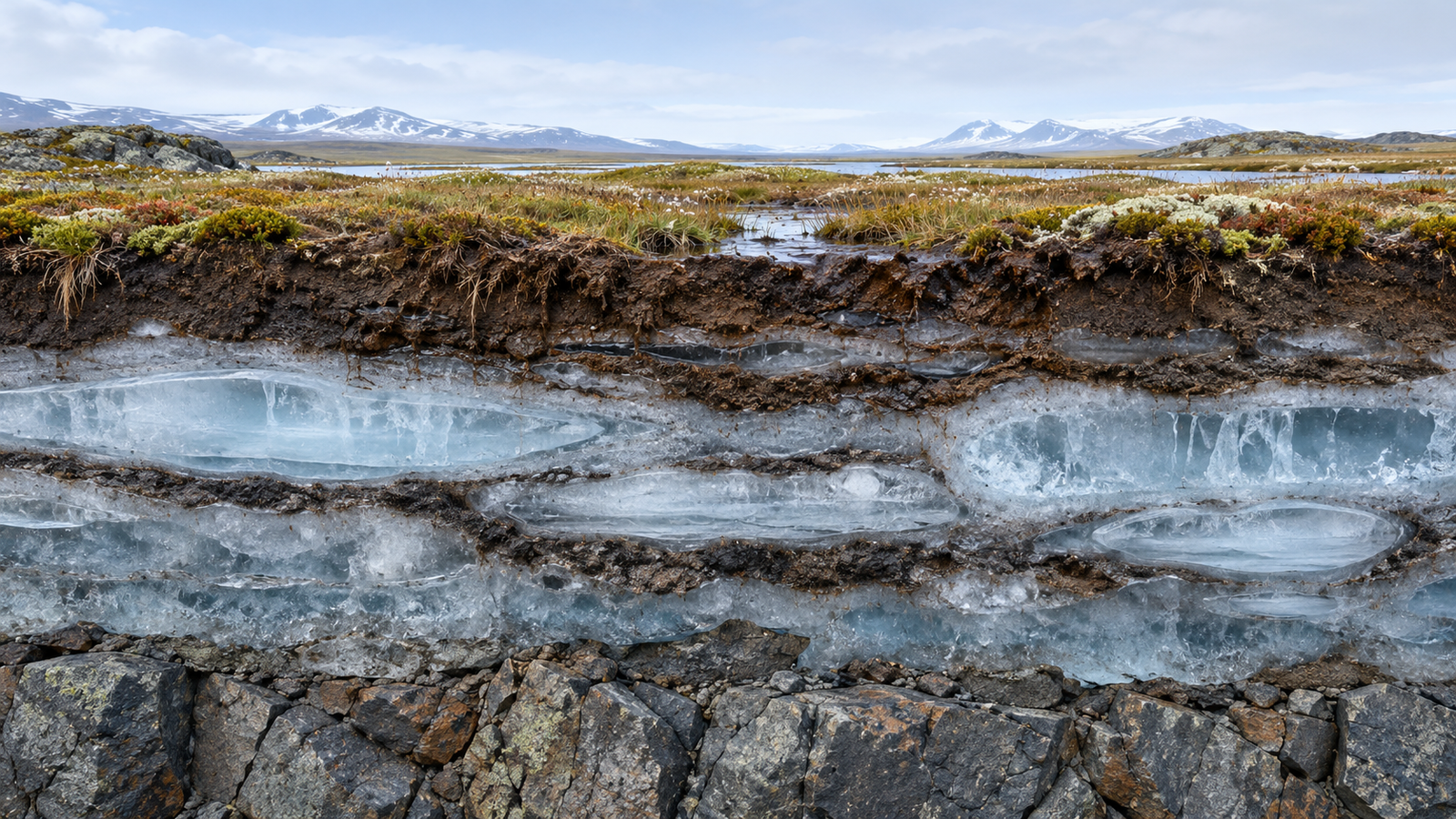
Permafrost is soil, sediment, or rock that remains at or below 0°C for at least two consecutive years. It may contain large amounts of ice, little ice, or almost no ice at all. Its scientific definition is based on temperature, not on ice content. [1]
Above the permafrost lies the active layer—the part of the ground that thaws during the warm season and freezes again in winter. As the climate warms, this active layer generally becomes deeper, exposing previously frozen material to biological and geological processes.
Permafrost occurs across the Arctic, Canada, Alaska, Siberia, Scandinavia, the Tibetan Plateau, high mountain regions, and ice-free parts of Antarctica. It underlies roughly one-quarter of the Northern Hemisphere’s land area. [2]
Why Is Permafrost Important for the Climate?
For thousands of years, cold and often waterlogged conditions have slowed the decomposition of plant remains. As a result, northern permafrost soils have accumulated vast quantities of organic carbon.
According to the IPCC, permafrost soils and deposits contain approximately 1,070–1,360 petagrams of carbon. One petagram equals one billion tonnes. This does not mean that all of this carbon will be released into the atmosphere, but it demonstrates the scale of the stored carbon and its importance to the climate system. [3]
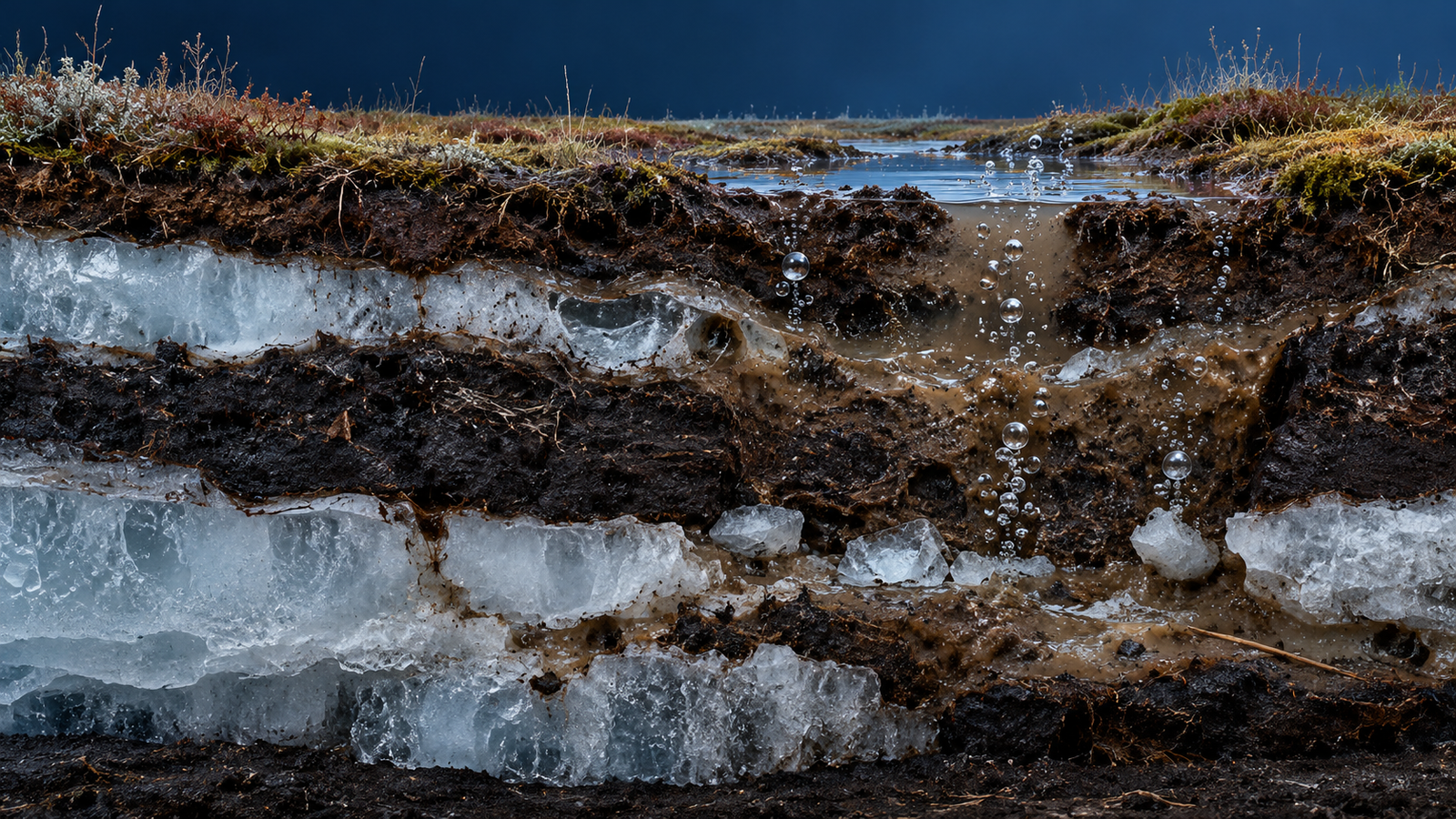
When permafrost thaws, previously frozen organic material becomes available to microorganisms:
- In relatively dry, oxygen-rich soils, microbial decomposition mainly produces carbon dioxide, or CO₂.
- In water-saturated, oxygen-poor environments, it can produce methane, or CH₄.
These emissions can intensify warming, while additional warming can promote further thaw. This mechanism is known as the permafrost carbon feedback. [4]
How Does Permafrost Thaw?
Thaw does not occur in the same way everywhere.
Gradual Thaw
In the most common scenario, the summer active layer deepens and the thawed season becomes longer. This change may appear gradual, but over decades it increases microbial access to previously frozen carbon.
Abrupt Thaw
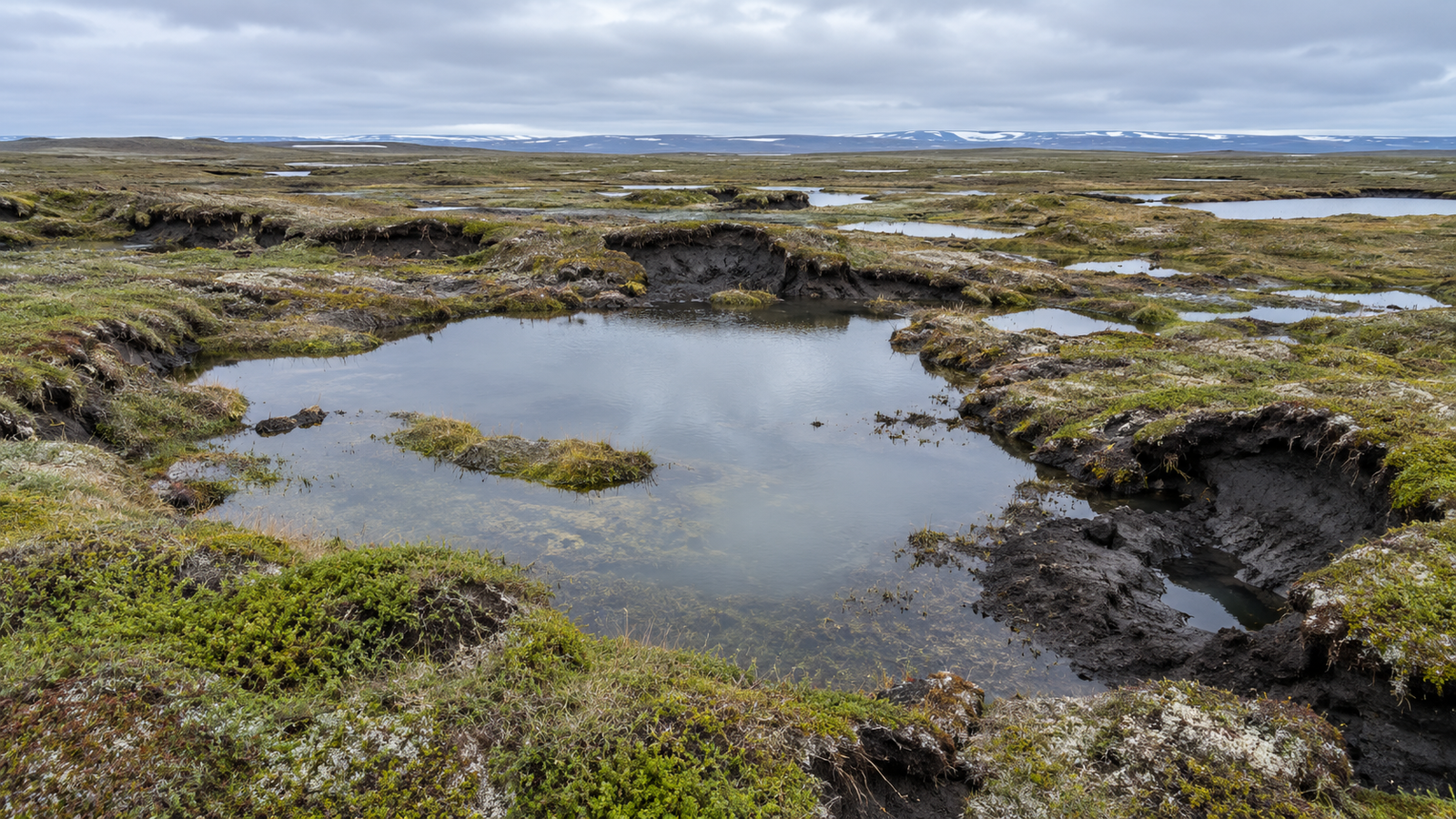
In ice-rich soils, thaw can rapidly transform an entire landscape. When ground ice melts, the soil loses volume and the surface can subside, creating depressions, waterlogged terrain, thermokarst lakes, landslides, and coastal erosion.
Abrupt thaw is important because it can affect depths within a few years or decades that gradual thaw would take much longer to reach. [5]
What Do Observations Show?
Scientific observations confirm that permafrost is warming. The IPCC estimates that global permafrost temperatures increased by approximately 0.29°C between 2007 and 2016, while active-layer thickening has been observed across many Arctic regions. [6]
However, these changes are not uniform. The same increase in air temperature can have very different consequences depending on:
- Ground-ice content
- Snow-cover thickness
- Vegetation
- Water movement
- Soil composition
- Wildfire activity
- Slope and solar exposure
For this reason, the risk to a particular settlement, road, or building cannot be assessed using broad climate maps alone. Local measurements and geological investigations are essential.
Is Permafrost Thaw a “Methane Bomb”?
Not in that simple sense.
Permafrost thaw is a serious, long-term climate risk, but scientific evidence does not support the idea of a single threshold at which the entire Arctic would suddenly begin releasing methane uncontrollably. The IPCC concludes that the direction of carbon loss and the overall risk are clear, while the timing, magnitude, and relative proportions of CO₂ and CH₄ emissions remain uncertain. [3]
This does not make the risk less important. It means that permafrost thaw should be understood not as one instantaneous catastrophe, but as a long-term amplifying factor that makes limiting global warming more difficult.
What Happens to Ecosystems?
Thawing ground alters water movement, vegetation, and wildlife habitats. Some areas become wetter and develop lakes or wetlands, while others become drier as water drains into formerly frozen ground.
Plant communities also change. Shrubs may expand in some regions, while ground subsidence or waterlogging can damage vegetation in others. Increased plant growth may absorb some CO₂, but it does not offset microbial emissions from thawing soil in every landscape. The final carbon balance depends on local moisture, temperature, soil structure, and wildfire conditions. [7]
Why Is Permafrost Also an Infrastructure Problem?
Many northern cities, homes, roads, airports, pipelines, and industrial facilities were built on the assumption that the ground beneath them would remain permanently frozen and stable. When ground ice melts, soil-bearing capacity can decline and the land surface may subside unevenly.
A 2018 pan-Arctic assessment found that millions of people and a substantial share of northern infrastructure could be located in areas exposed to permafrost-thaw risk by the middle of the century. These results are large-scale model estimates, not exact predictions for every building, but they highlight the need for local engineering assessments. [8]
Adaptation measures may include insulation, ventilated foundations, ground-cooling systems, redesigned drainage, and continuous monitoring. However, these measures depend on local conditions and cannot replace reductions in greenhouse-gas emissions.
How Do Scientists Measure Permafrost Change?
Permafrost monitoring combines fieldwork, geological measurements, and satellite observations.
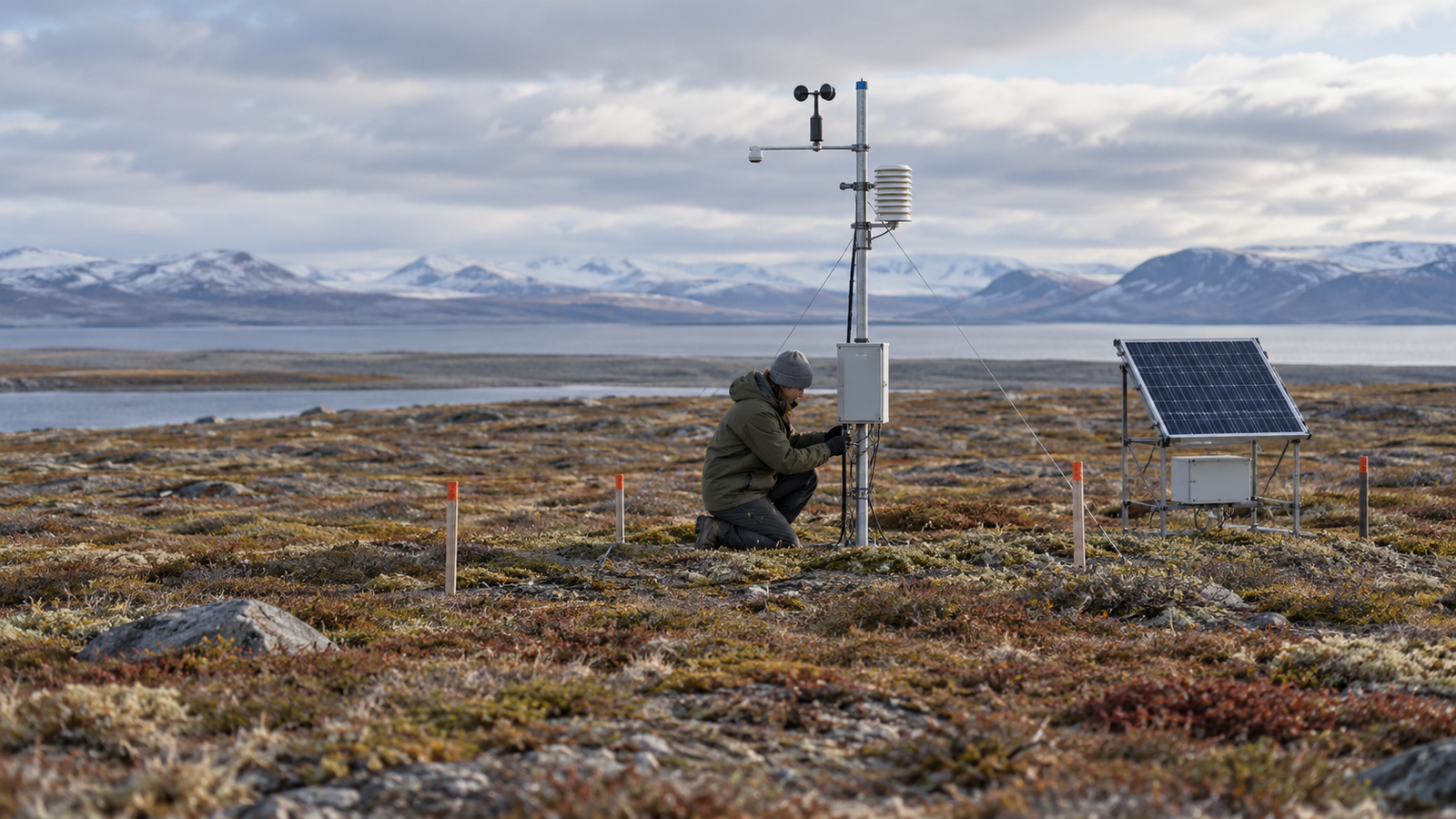
Boreholes measure ground temperature at different depths.
Active-layer monitoring stations track the depth of seasonal thaw.
Interferometric synthetic aperture radar, or InSAR, can detect millimetre-scale surface subsidence from satellites, often associated with the melting of underground ice. [9]
The Global Terrestrial Network for Permafrost brings together data from hundreds of boreholes and active-layer observation sites, providing an international foundation for comparable long-term monitoring. [10]
What Can Change the Outcome?
Large-scale permafrost thaw cannot be stopped through a single local action because it is linked to global temperature. However, limiting warming makes a meaningful difference.
Scientific assessments indicate that the difference between 1.5°C and 2°C of global warming could preserve millions of square kilometres of permafrost. [11]
The most effective strategy has two parts:
- Rapidly reduce greenhouse-gas emissions to limit future thaw.
- Invest in local monitoring, risk mapping, and climate-resilient engineering in northern communities.
Conclusion
Permafrost is not simply frozen ground. It is a long-term carbon store, a structural foundation for natural landscapes, and a critical support system for northern communities.
Its thaw is not a distant or purely future problem. It is an ongoing Earth-system process that connects microbial life, climate physics, satellite science, and infrastructure safety. The less the planet warms, the greater the opportunity to preserve the stability of these frozen systems.
Selected Scientific Sources and Books
- Schuur, E. A. G. et al. “Climate Change and the Permafrost Carbon Feedback.” Nature (2015). Scientific article
- Turetsky, M. R. et al. “Carbon Release Through Abrupt Permafrost Thaw.” Nature Geoscience (2020). Scientific article
- Schuur, E. A. et al. “Permafrost and Climate Change: Carbon Cycle Feedbacks from the Warming Arctic.” Annual Review of Environment and Resources (2022). Scientific article
- Hjort, J. et al. “Degrading Permafrost Puts Arctic Infrastructure at Risk by Mid-Century.” Nature Communications (2018). Scientific article
- Bartsch, A., Strozzi, T., & Nitze, I. “Permafrost Monitoring from Space.” Surveys in Geophysics (2023). Scientific article
- IPCC. Climate Change 2021: The Physical Science Basis, Chapters 5 and 9. IPCC assessment
- van Huissteden, J. Thawing Permafrost: Permafrost Carbon in a Warming Arctic. Springer, 2020. Book
- French, H. M. The Periglacial Environment, 4th Edition. Wiley, 2018. Book
- Davis, N. Permafrost: A Guide to Frozen Ground in Transition. University of Alaska Press, 2001. Book