
Soil Microbiomes: The Underground Ecosystems That Regulate Nutrients, Carbon, and Plant Health
Soil microbiomes regulate nutrient cycling, carbon storage, soil structure, and plant health through complex interactions among microbes, roots, and minerals.
Share this story
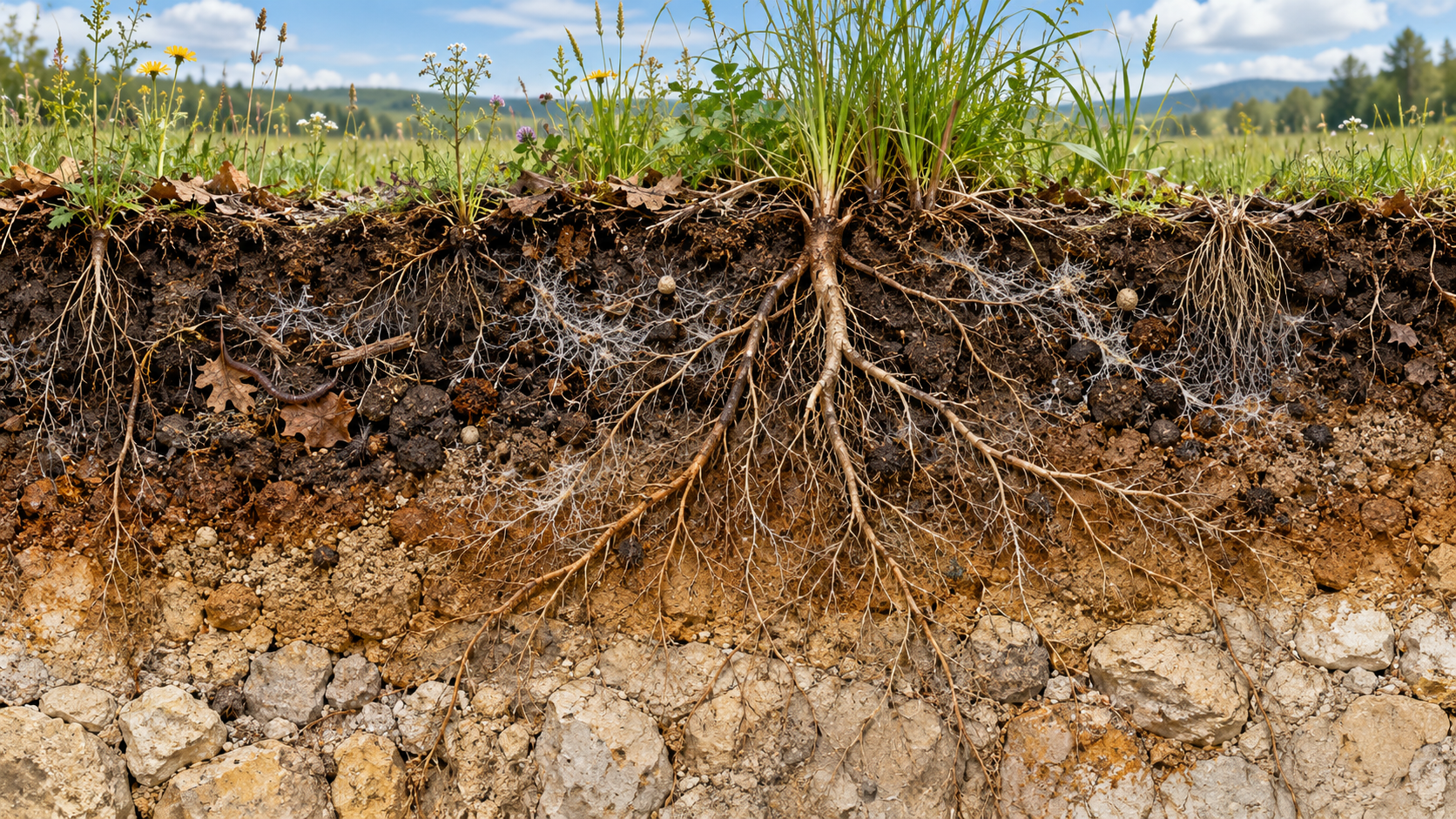
Soil is not simply a mixture of fragmented rock and organic debris. It is a dynamic porous environment composed of water, air, mineral particles, organic matter, and living organisms. The community of microorganisms living in this environment—including bacteria, fungi, archaea, protists, and, depending on the research definition, viruses—is known as the soil microbiome. These organisms form microscale ecosystems whose activity influences organic-matter decomposition, nutrient availability, soil structure, plant growth, and carbon cycling. [1][2]
The soil microbiome should not be reduced to a collection of “beneficial bacteria.” It includes mutualistic, neutral, competitive, predatory, and sometimes pathogenic organisms. Its ecological importance lies not merely in a list of species, but in how its members interact with one another, with plant roots, and with the physical and chemical properties of soil.
What Determines the Structure of a Soil Microbiome?
A soil microbiome is not a uniform mass. Conditions can differ sharply over only a few millimetres: some pores are rich in oxygen, others are water-saturated; some zones contain concentrated organic matter, while mineral surfaces may hold attached microbial cells and organic compounds.
Major factors shaping microbial communities include:
- soil pH;
- moisture and water availability;
- temperature;
- soil texture, including the proportions of sand, silt, and clay;
- the spatial distribution of oxygen;
- the quantity and chemical composition of organic carbon;
- nitrogen and phosphorus availability;
- vegetation;
- the history of land use and soil management. [2]
Large-scale global studies show that the distribution of soil bacteria and fungi is not random. Climate, pH, vegetation, and soil chemistry jointly influence which microbial groups can persist in a particular environment. [3][4]
Which Organisms Make Up the Soil Microbiome?
Bacteria and Archaea
Bacteria and archaea participate in many biogeochemical processes. Some groups rapidly consume simple organic compounds, whereas others specialize in decomposing more persistent materials, oxidizing ammonium, reducing nitrate, or fixing atmospheric nitrogen.
Archaea are especially important in ammonia oxidation in certain soils. This process is one stage of the nitrogen cycle in which ammonium is transformed into nitrite and subsequently nitrate.
Fungi
Soil fungi often form long, branching filaments called hyphae. This structure allows them to move through fine soil pores and reach nutrient resources that may be inaccessible to more localized bacterial cells.
Many fungi contribute to the breakdown of complex plant polymers, including cellulose, hemicellulose, and lignin. They can also support the formation of soil aggregates by binding mineral particles, organic matter, and microbial products together. [1][2]
Protists, Nematodes, and Viruses
Protists feed on bacteria, fungi, or other microorganisms, thereby reshaping microbial community composition. Their grazing can accelerate the return of some nutrients to the soil solution, although the outcome depends on local conditions and the wider soil food web.
Viruses infect microorganisms and can influence host mortality, gene exchange, and community dynamics. Soil viral diversity remains comparatively understudied, but viruses are not passive components of the microbial network.
The Rhizosphere: An Active Zone Around Plant Roots
The soil zone directly surrounding plant roots is called the rhizosphere. It often differs biochemically from soil farther away because plants release sugars, amino acids, organic acids, phenolic compounds, lipids, and other metabolites through their roots.
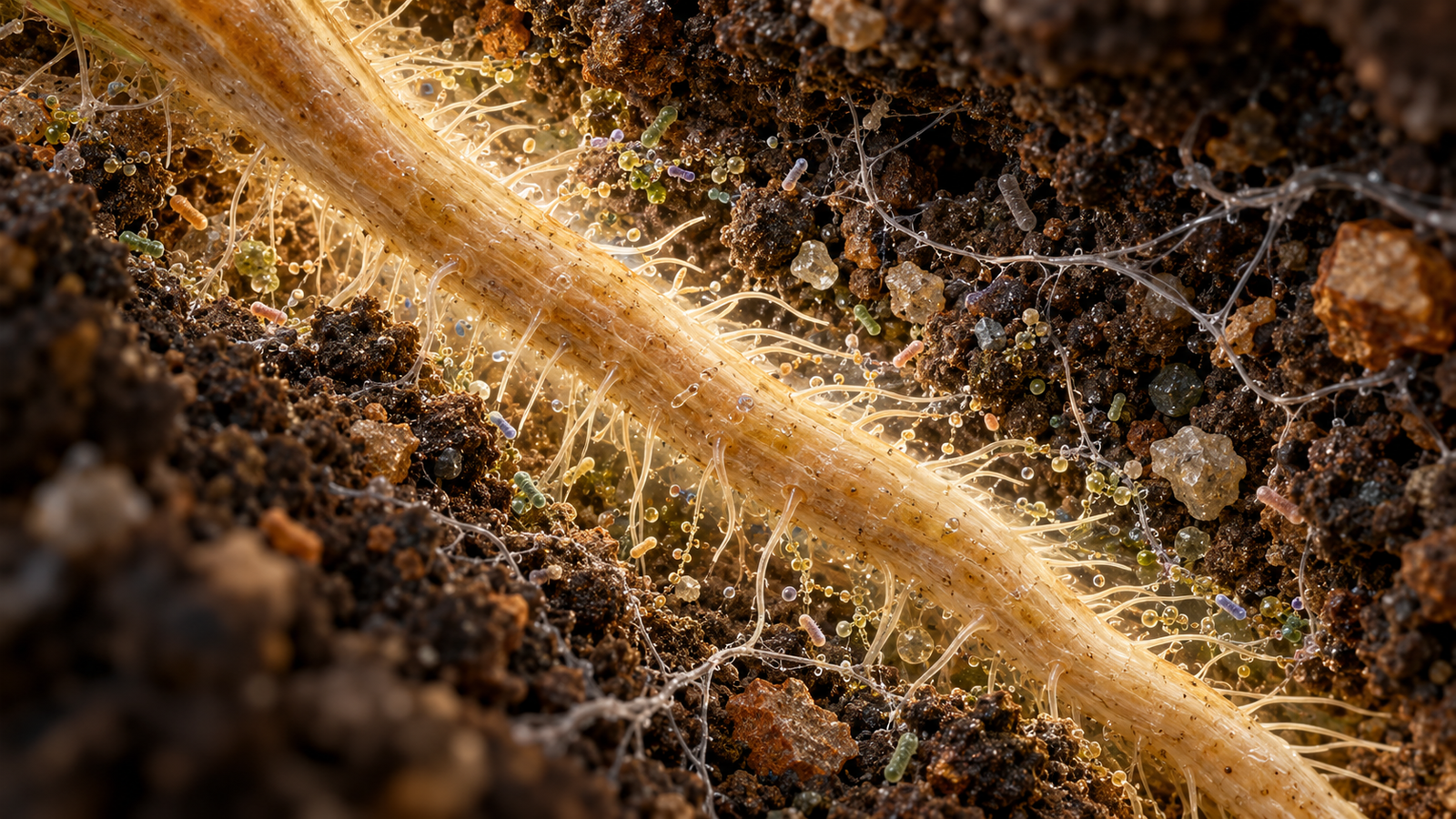
These compounds provide energy and nutrients for many microorganisms. As a result, microbial abundance, community composition, and biochemical activity may differ markedly near roots. Research has shown that changes in the chemistry of root exudates during plant development can shape the assembly of rhizosphere microbial communities. [5]
However, it is inaccurate to suggest that plants completely control their microbiomes. The rhizosphere emerges from the combined effects of the plant, soil properties, the local microbial pool, moisture, temperature, and competitive interactions.
Carbon Cycling: From Decomposition to Soil Organic Matter
Plant leaves, roots, and other residues are the original sources of much soil organic matter. Yet their carbon does not become stable soil carbon immediately. It must first be processed by microorganisms and fungi.
Microorganisms release extracellular enzymes that break complex organic compounds into smaller molecules. These products can then be:
- used for microbial growth;
- converted to carbon dioxide through cellular respiration;
- incorporated into microbial biomass;
- retained in soil as the remains of dead microbial cells, known as microbial necromass.
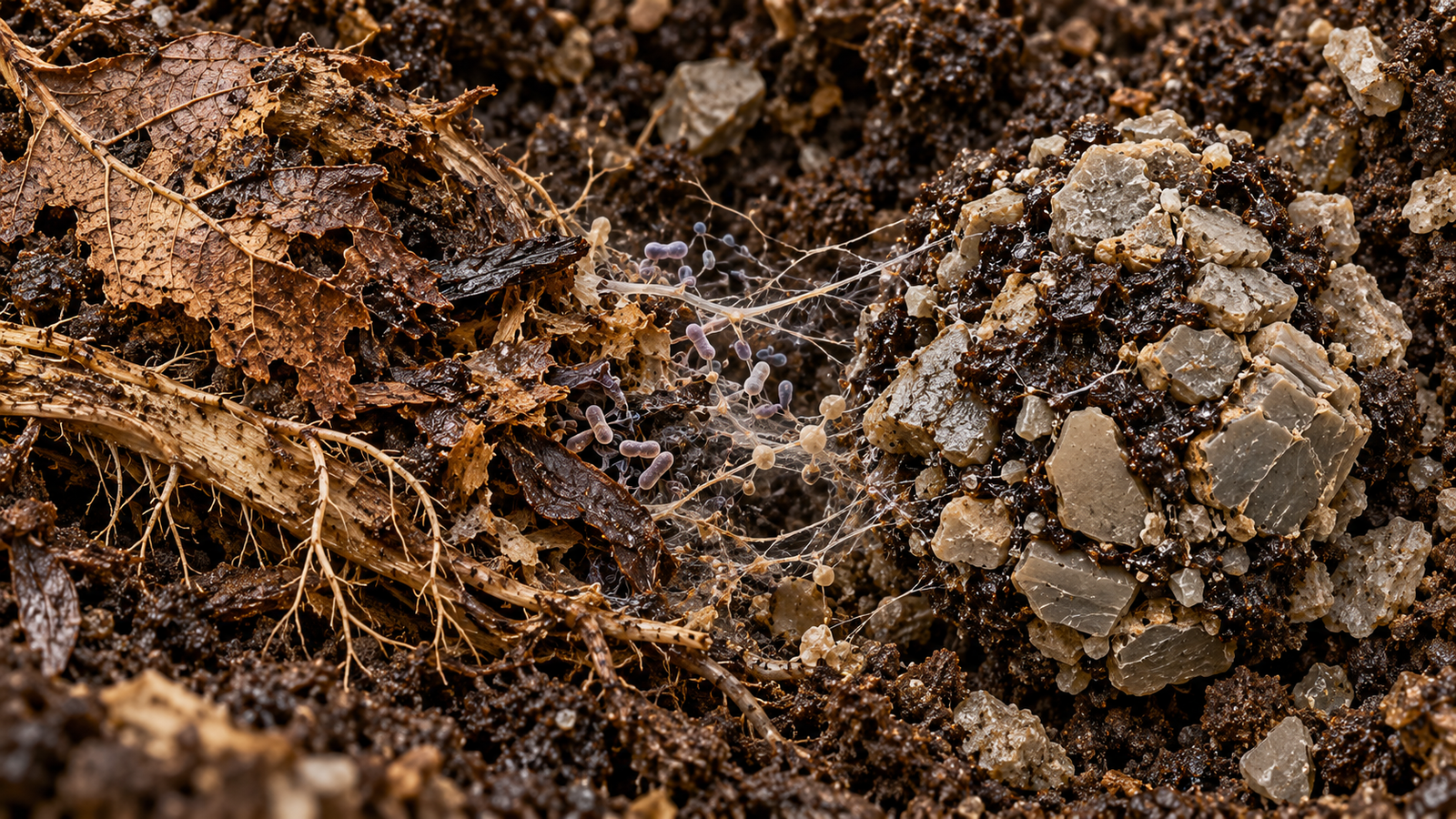
Microbial necromass can be an important source of stable soil organic matter, particularly when it becomes associated with clay minerals and other fine particles or is physically protected inside soil aggregates. For this reason, soil-carbon storage depends not only on the amount of plant residue entering the soil, but also on how microorganisms process that material and on the mineral properties of the soil itself. [7][8]
Therefore, the statement “more organic matter automatically means more stable soil carbon” is scientifically incomplete. The outcome depends on soil type, clay content, moisture, temperature, aeration, and microbial metabolism.
Nitrogen Cycling: Transformations Regulated by Microorganisms
Nitrogen is essential for plant growth, but most atmospheric nitrogen occurs as nitrogen gas, N₂, which plants cannot use directly. Soil microorganisms participate in several transformations that make nitrogen available, retain it in soil, or return it to the atmosphere.
Nitrogen fixation: Certain bacteria and archaea can convert atmospheric N₂ into biologically usable ammonium compounds. Rhizobial bacteria living in the root nodules of legumes are among the best-known examples.
Ammonification, or mineralization: Microorganisms decompose organic nitrogen-containing matter and release ammonium.
Nitrification: In oxygen-rich zones, specialized bacteria and archaea can transform ammonium into nitrite and then nitrate.
Denitrification: In oxygen-limited microsites, some microorganisms can use nitrate as an electron acceptor, converting it into gaseous nitrogen forms, including N₂O and N₂.
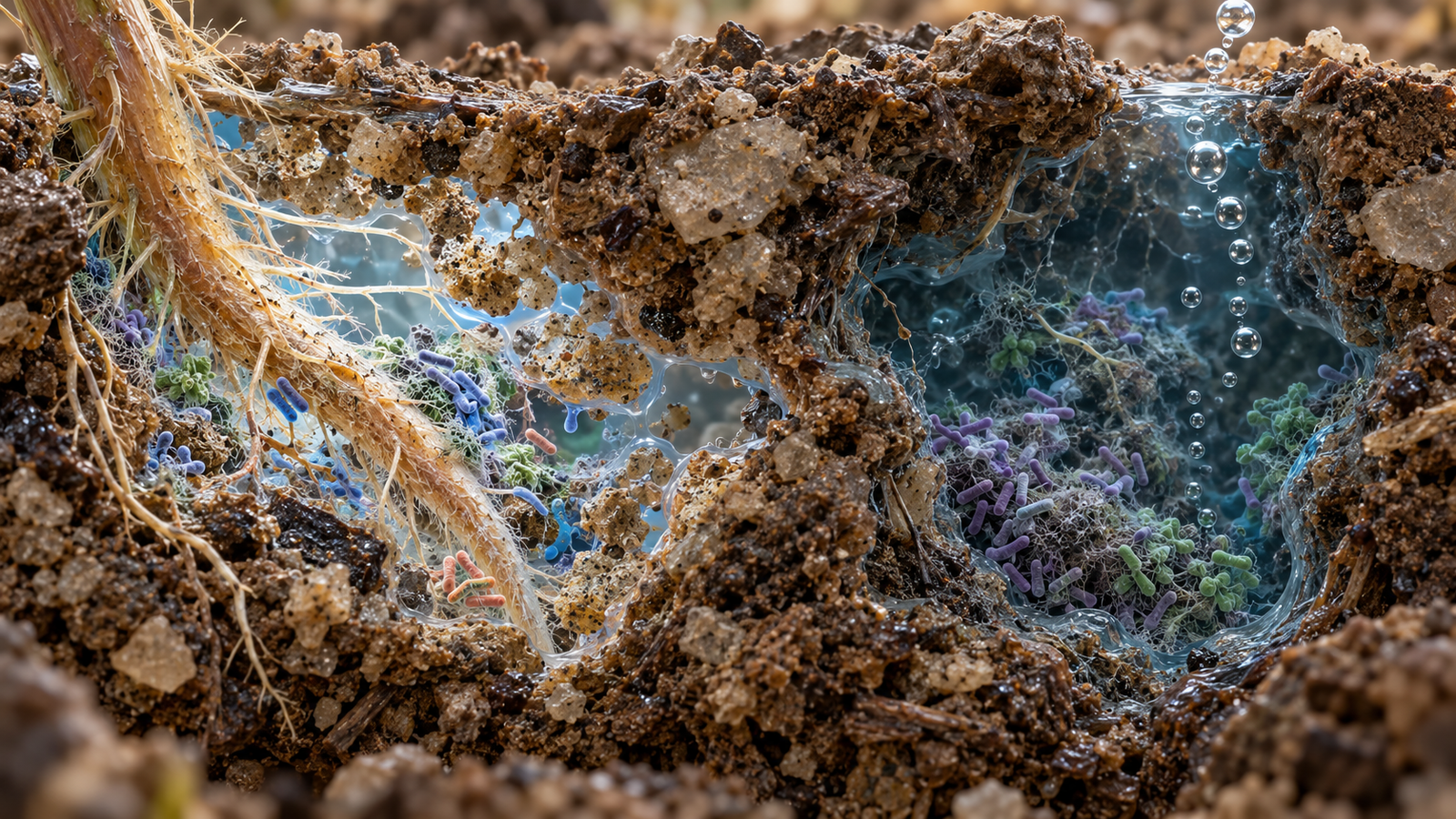
These processes determine how much nitrogen is available to plants, how much may be leached toward groundwater, and under which conditions nitrous oxide, N₂O, may be produced. Microbial-diversity loss can alter nitrogen transformations, although the specific effects depend on the soil environment and the functions that are lost. [16][17]
Phosphorus, Mycorrhizae, and Plant Nutrition
Phosphorus is essential for plant growth, but in many soils it occurs in chemical forms that are poorly soluble or move slowly through the soil solution. Microorganisms and fungi can contribute to the decomposition of organic phosphorus compounds and alter the mobility of mineral phosphate.
Mycorrhizae are symbiotic associations between plant roots and fungi. Mycorrhizal hyphae can extend beyond the zone of nutrient depletion immediately surrounding roots and reach more distant mineral resources. In exchange, plants supply fungi with carbon compounds derived from photosynthesis. This exchange can be especially important under phosphorus-limited conditions, but its effects are not identical across all plants, fungi, and soils. [6][9]
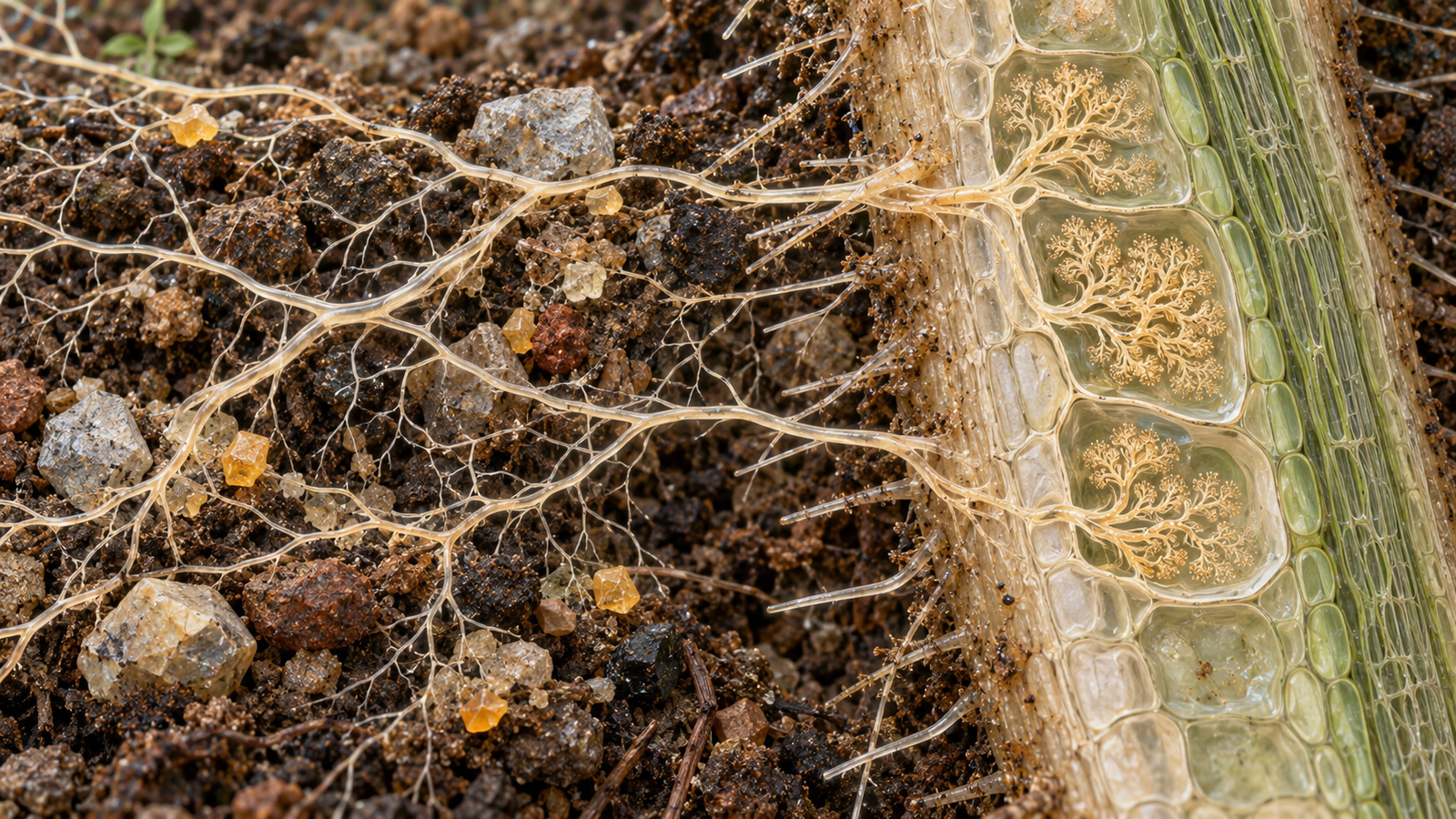
Mycorrhizae should not be portrayed as a flawless “underground internet” through which trees inevitably exchange food or signals. Common mycorrhizal networks have been documented in some systems, but widespread claims that “mother trees” intentionally nourish seedlings or send defensive messages through these networks are not supported by sufficient evidence. [10]
How Are Soil Microbiomes Studied?
Studying soil microbiomes is difficult because soil is highly heterogeneous. Samples collected at different depths, from different plants, in different seasons, or even from separate sections of a single root system can differ substantially.
Important research approaches include:
- Cultivation: Growing microorganisms on culture media. This remains necessary for physiological experiments, but it does not capture all organisms living in soil.
- 16S rRNA and ITS marker sequencing: Used to describe bacterial and archaeal groups, and fungal groups, respectively.
- Shotgun metagenomics: Examines all DNA in a sample and can reveal the potential presence of metabolic genes.
- Metatranscriptomics: Measures which genes are being expressed at a particular time.
- Metabolomics and metaproteomics: Help identify chemical activity and the proteins produced by microbial communities.
- Stable-isotope probing: Uses labelled compounds, such as ^13C or ^15N, to identify which organisms actively use a particular resource.
None of these methods provides a complete answer on its own. Detecting DNA does not necessarily mean that an organism is alive, active, or performing the function attributed to it. Likewise, the presence of a gene does not prove that it is being expressed. Robust research therefore combines genetic, chemical, physiological, and field-based measurements. [11][12]
The Limits of the “Healthy Soil Microbiome” Concept
There is no single “ideal” microbiome for every soil. Forest, grassland, agricultural, dryland, and wetland soils naturally host different communities and functions. A microbial composition observed in one soil cannot automatically be treated as a health benchmark for another.
Assessing soil biological condition requires microbial information to be combined with other indicators, including:
- soil organic carbon;
- pH;
- aggregate stability;
- water retention;
- nutrient cycling;
- plant productivity;
- the suppression or spread of disease.
High microbial diversity alone does not prove that a soil is healthy. Some functions can be performed by relatively few taxa, while highly diverse communities may also include organisms harmful to plants or animals. [13]
Agriculture and Microbial Inoculants
Soil-microbiome science is often used to promote biofertilizers, microbial inoculants, and plant-growth-promoting products. These tools may be useful in particular settings, but their performance in field conditions is often highly variable.
An introduced microorganism must survive, compete with established communities, reach an appropriate root zone, and retain its function under changing temperature, moisture, pH, fertilization, and management conditions. A successful laboratory or greenhouse result is not guaranteed to be reproduced in an open field. [15]
A more scientifically grounded approach is not to attempt to “fix” a soil microbiome with a single product, but to evaluate the soil’s specific limitations and manage multiple factors together: maintaining soil cover, supporting plant diversity, returning organic matter appropriately, reducing compaction and erosion, and planning fertilization on the basis of local soil-chemistry data.
Climate and Human Pressures
Warming, drought, flooding, soil acidification, salinization, nitrogen deposition, pollution, and land-use change can restructure soil microbiomes. These changes matter not only for individual species, but also for the functioning of entire ecosystems.
For example, prolonged drought can limit microbial activity, while the return of rainfall may trigger rapid biochemical responses. In water-saturated, oxygen-poor soils, anaerobic metabolic pathways may become more important. Changes in soil pH can reorganize microbial groups involved in nitrogen cycling and influence the probability of N₂O emissions. [14][16]
However, soil microbiomes should not be presented as an independent and guaranteed climate solution. Soil-carbon persistence, greenhouse-gas fluxes, and plant productivity emerge from the combined effects of climate, mineral composition, water regime, vegetation, and management.
Open Scientific Questions
Soil-microbiome science is developing rapidly, yet several fundamental questions remain unresolved.
How can DNA sequences be linked reliably to real ecosystem functions? Which microbial traits predict soil resilience to drought, warming, or salinization? Under what conditions can microbial inoculants work consistently in open fields? And how can soil biodiversity be protected without treating it solely as a tool for agricultural productivity?
Answering these questions requires long-term field experiments, multi-season sampling, integrated soil-chemistry data, and the combined study of bacteria, fungi, protists, viruses, and soil animals—not bacteria alone. [11]
Conclusion
The soil microbiome is one of the biosphere’s major regulatory systems. It transforms dead organic matter, mediates carbon, nitrogen, and phosphorus cycling, contributes to soil structure, and influences plant nutrition and disease processes.
Its scientific importance extends far beyond the simplified idea of “beneficial microbes.” The soil microbiome is a complex, spatially heterogeneous, and continuously changing ecological system. Understanding it requires careful interpretation, multiple research methods, and close attention to local environmental conditions.
Sources and Further Reading
[1] Paul, E. A., & Frey, S. D., eds. Soil Microbiology, Ecology and Biochemistry, 5th ed., Academic Press, 2023. Book page
[2] Philippot, L. et al. “The interplay between microbial communities and soil properties.” Nature Reviews Microbiology, 2024. Article
[3] Delgado-Baquerizo, M. et al. “A global atlas of the dominant bacteria found in soil.” Science, 2018. Article
[4] Tedersoo, L. et al. “Global diversity and geography of soil fungi.” Science, 2014. Article
[5] Zhalnina, K. et al. “Dynamic root exudate chemistry and microbial substrate preferences drive patterns in rhizosphere microbial community assembly.” Nature Microbiology, 2018. Article
[6] Zhao, B. et al. “Microbe-dependent and independent nitrogen and phosphate acquisition and regulation in plants.” New Phytologist, 2024. Article
[7] Cotrufo, M. F. et al. “The Microbial Efficiency-Matrix Stabilization framework.” Global Change Biology, 2013. Article
[8] Buckeridge, K. M. et al. “Deconstructing the microbial necromass continuum to inform soil carbon sequestration.” Functional Ecology, 2022. Article
[9] Smith, S. E., & Read, D. J. Mycorrhizal Symbiosis, 3rd ed., Academic Press, 2008. Book page
[10] Karst, J., Jones, M. D., & Hoeksema, J. D. “Positive citation bias and overinterpreted results lead to misinformation on common mycorrhizal networks in forests.” Nature Ecology & Evolution, 2023. Article
[11] Geisen, S. “The future of soil microbiome studies: current limitations, integration, and perspectives.” mSystems, 2021. Article
[12] Zhang, H. et al. “Cutting edge tools in the field of soil microbiology.” Current Research in Microbial Sciences, 2024. Article
[13] Fierer, N. et al. “How microbes can, and cannot, be used to assess soil health.” Soil Biology and Biochemistry, 2021. Article
[14] Jansson, J. K., & Hofmockel, K. S. “Soil microbiomes and climate change.” Nature Reviews Microbiology, 2020. Article
[15] O’Callaghan, M. et al. “Soil microbial inoculants for sustainable agriculture: limitations and opportunities.” Soil Use and Management, 2022. Article
[16] Zhong, Z. et al. “Alterations in soil pH emerge as a key driver of the impact of global change on soil microbial nitrogen cycling.” Global Ecology and Biogeography, 2023. Article
[17] Philippot, L. et al. “Loss in microbial diversity affects nitrogen cycling in soil.” The ISME Journal, 2013. Article