
Solid-State Batteries: The Science, Opportunities, and Limits of Replacing Liquid Electrolytes with Solids
Solid-state batteries use solid electrolytes to improve safety and energy storage.
Share this story
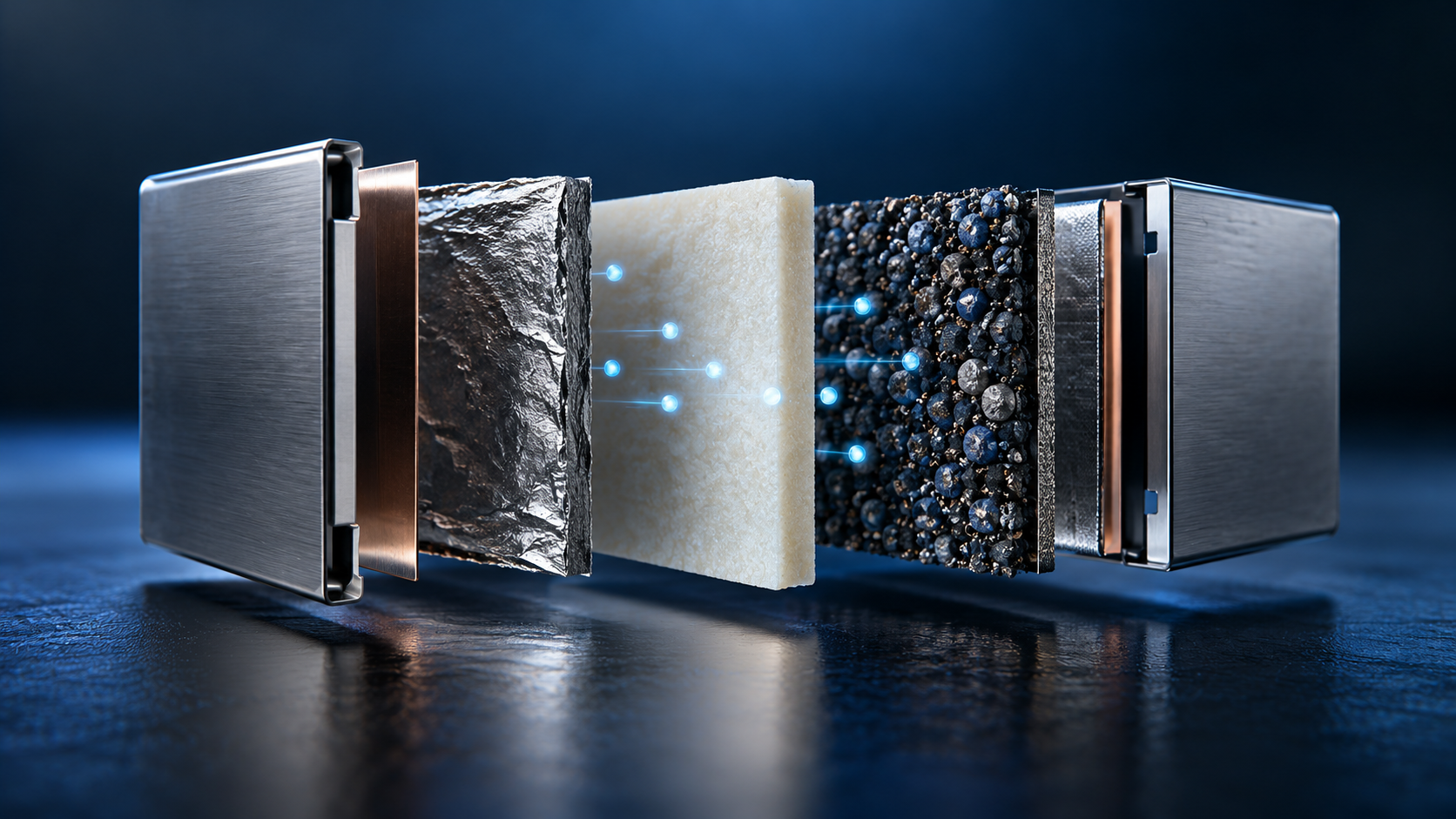
Solid-state batteries are often described as the next major breakthrough for electric vehicles, portable electronics, and grid-scale energy storage. The scientific reality, however, is more nuanced—and more compelling—than the headlines suggest. Replacing a liquid electrolyte with a solid material may create a pathway toward safer and higher-energy batteries, but it also introduces new challenges in materials science, mechanical engineering, and manufacturing.
What Changes Inside the Battery?
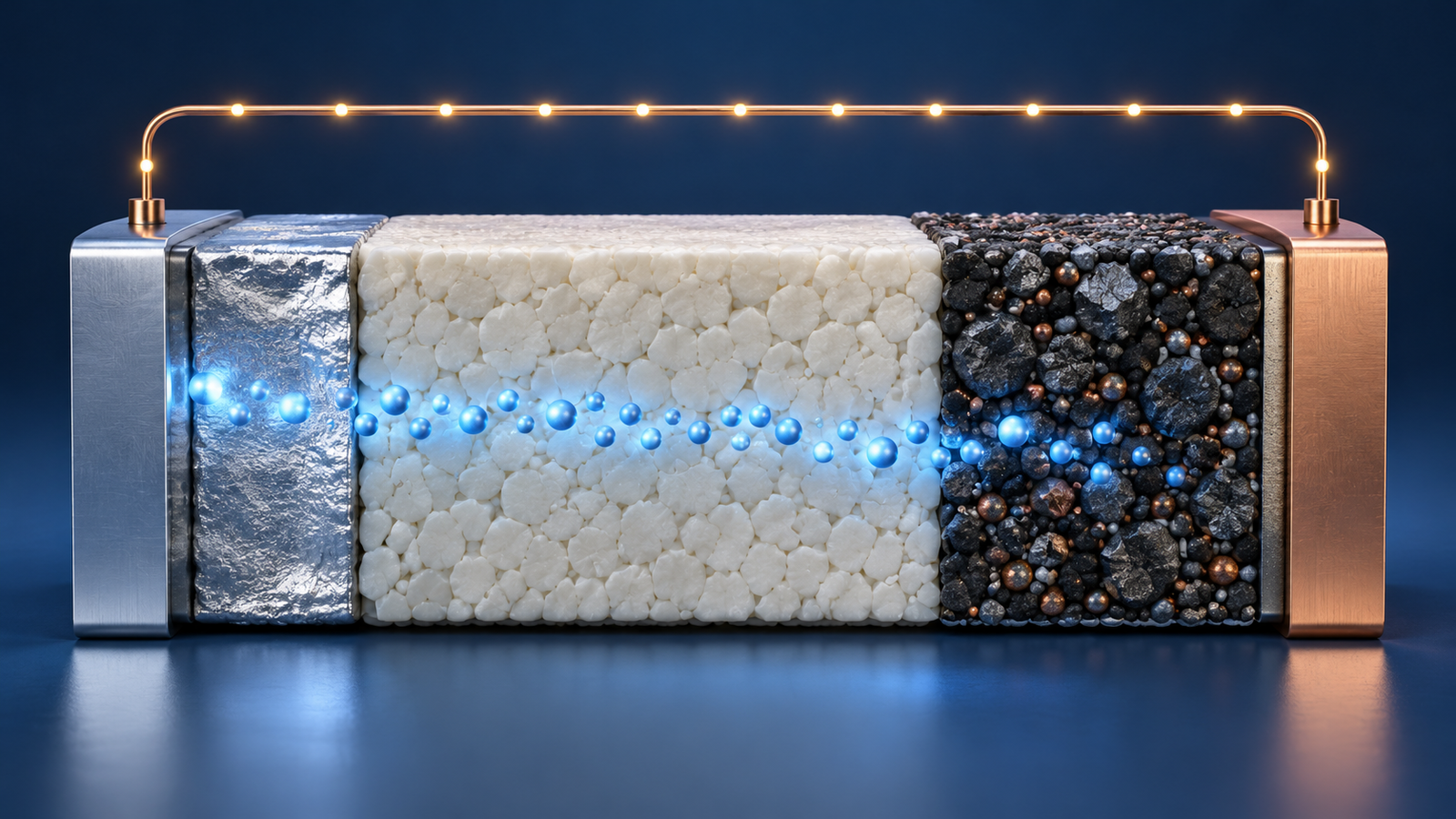
In a conventional lithium-ion battery, the two electrodes—the anode and cathode—are separated by a porous separator soaked in a liquid organic electrolyte. During charging and discharging, lithium ions move through the electrolyte inside the cell, while electrons travel through the external circuit to deliver useful electrical power.
In an all-solid-state battery, the liquid electrolyte is replaced by a solid ion-conducting material. This material must meet three essential requirements:
- Conduct lithium ions rapidly
- Block electron flow
- Remain chemically and mechanically stable in contact with both electrodes
This is not a minor design adjustment. It changes the entire architecture of the battery. A liquid electrolyte naturally fills microscopic gaps and irregularities, whereas creating reliable contact between two solid surfaces is far more difficult.
Why Are Scientists Interested in Solid-State Batteries?
One of the main motivations is the possibility of using a lithium-metal anode. In theory, lithium metal can store substantially more charge than the graphite anodes used in most commercial lithium-ion batteries today. If it can be used safely and reliably, it could increase battery energy density without proportionally increasing battery mass.
The second major motivation is safety. Many conventional lithium-ion batteries contain flammable organic liquid electrolytes. Removing these liquids may reduce certain risks, particularly electrolyte leakage and fires involving combustible solvents. However, this does not mean that a solid-state battery is automatically “safe.” Any system that stores a large amount of energy can still be vulnerable to short circuits, thermal stress, and mechanical damage. The U.S. Department of Energy emphasizes that battery safety must be assessed at the system level, not solely by considering the electrolyte material. [1]
The Main Types of Solid Electrolytes
A solid electrolyte is not a single material, but a broad family of materials with different strengths and limitations.

Oxide Ceramics
Oxide-based solid electrolytes, including lithium-containing garnet-type ceramics, are mechanically robust and relatively stable. Their main limitation is rigidity: ceramic surfaces are difficult to bring into perfect contact without creating microscopic gaps or high-resistance regions.
Some oxide systems also require high-temperature synthesis and sintering, which can complicate large-scale manufacturing. Manufacturing-cost studies show that producing thin, defect-free ceramic layers and managing high-temperature processing remain important industrial challenges. [2]
Sulfide Electrolytes
Sulfide-based materials are especially attractive because some can conduct lithium ions very rapidly and can form better contact with electrode particles under pressure than rigid oxide ceramics. This can reduce internal resistance and enable high-power performance in laboratory cells. [3]
However, sulfides can be highly sensitive to moisture. When exposed to water vapor, some sulfide electrolytes degrade and may release toxic hydrogen sulfide gas, H₂S. As a result, their manufacturing often requires tightly controlled dry environments. [4]
Polymer Electrolytes
Polymer electrolytes are flexible, comparatively easy to process, and can be produced as thin films. Their central challenge is a fundamental trade-off: the molecular mobility that helps ions move through the polymer can reduce its mechanical strength. Achieving both high ionic conductivity and sufficient mechanical robustness at room temperature remains an active research challenge. [5]
Other Emerging Materials
Halide, borohydride, and composite electrolytes are also being investigated. Some are promising because of their compatibility with high-voltage cathodes or their processability. However, no single material has yet achieved the ideal combination of high ionic conductivity, chemical stability, low cost, safe manufacturing, and long cycle life.
The Central Challenge: Interfaces
The defining scientific issue in solid-state batteries is the interface—the microscopic region where the electrolyte touches the anode or cathode.
Even when a solid electrolyte has excellent ionic conductivity on its own, the complete battery may perform poorly if the interfaces contain:
- Microscopic voids
- Chemically degraded layers
- High-resistance compounds
- Mechanical stress caused by cycling
- Uneven lithium deposition
A liquid electrolyte can penetrate pores and irregularities in an electrode. A solid material cannot adapt as easily. During charging and discharging, electrode particles undergo volume changes. If contact is lost, ionic pathways become interrupted. For this reason, much of today’s research focuses not only on finding better electrolytes, but also on developing protective coatings, flexible interlayers, and stable composite electrodes. [6]
Do Solid-State Batteries Eliminate Dendrites?
Not completely.
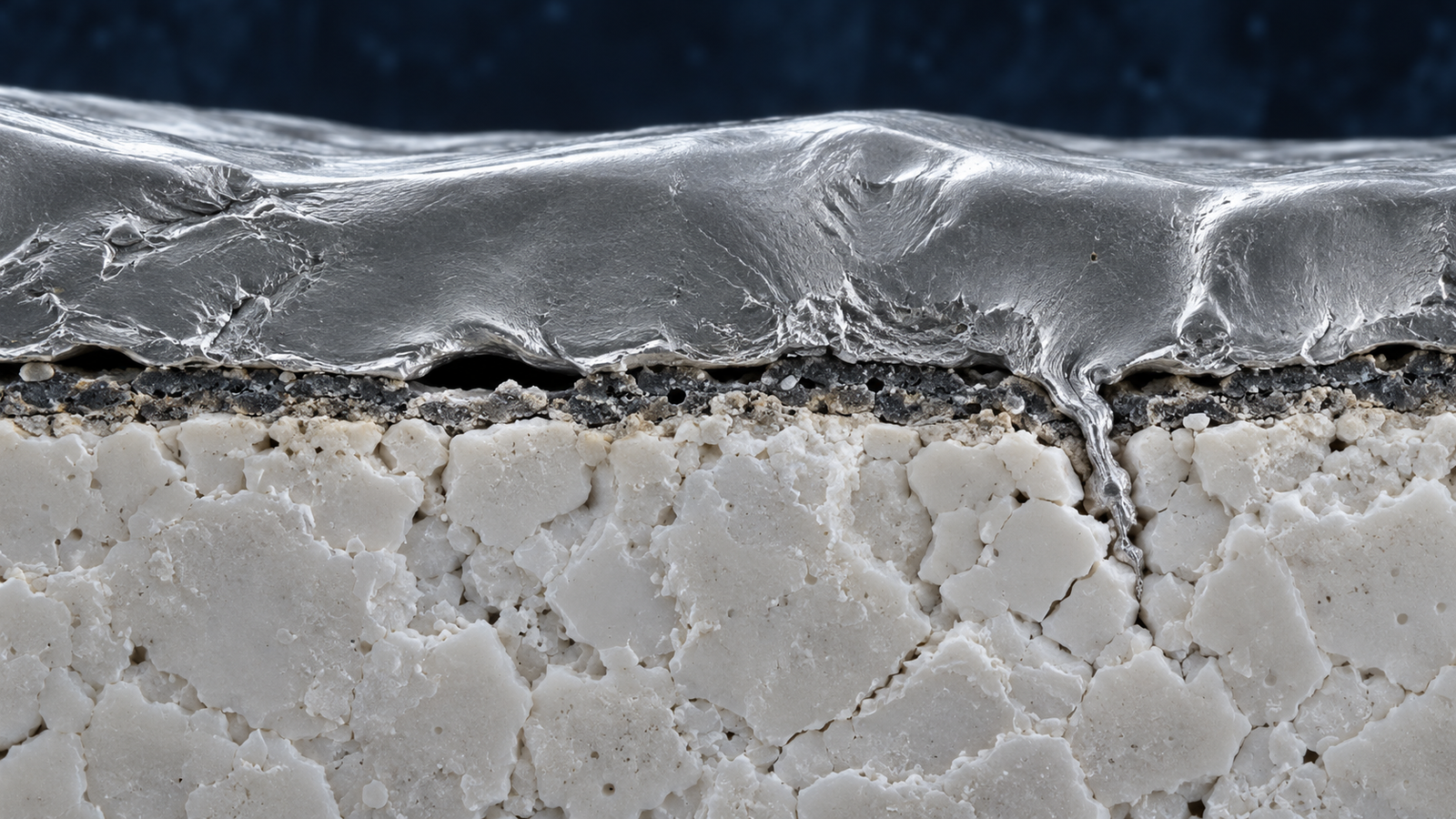
Dendrites are needle-like or branch-like lithium structures that can form during charging. If they grow far enough to reach the opposite electrode, they may cause a short circuit. Earlier assumptions suggested that the mechanical stiffness of a solid electrolyte would prevent this process. Later research showed that lithium can still penetrate through microscopic cracks, grain boundaries, or interfacial defects.
In other words, a solid electrolyte does not solve the dendrite problem simply because it is solid. Researchers must simultaneously control material microstructure, pressure, current density, interfacial chemistry, and manufacturing defects. [7]
Three Common Misconceptions
“A Solid-State Battery Is Always More Energy-Dense”
Only if the entire cell architecture is efficient. A lithium-metal anode may increase theoretical energy density, but thick electrolytes, protective layers, excess lithium, or heavy compression systems can reduce the final energy density of the complete battery.
“A Solid-State Battery Cannot Catch Fire”
A solid electrolyte may reduce risks associated with flammable liquid solvents, but the battery still stores substantial energy. Short circuits, heat generation, cathode reactions, and manufacturing defects remain important safety considerations.
“Solid-State Batteries Will Charge Automatically Faster”
Fast charging depends on much more than electrolyte conductivity. It also depends on interfacial resistance, thermal management, uniform lithium deposition, and electrode design. A highly conductive electrolyte alone does not guarantee fast charging in a practical battery.
How to Distinguish Scientific Progress from Marketing Claims
Any announcement about a solid-state battery should be evaluated through several important questions:
- Was the cell tested as a realistic full battery with both an anode and cathode?
- At what temperature did it operate?
- How much external pressure was required?
- How much active material was loaded into the cathode?
- How many charge-discharge cycles did it complete?
- Were safety and performance evaluated under damage or short-circuit conditions?
Without this information, claims such as “ultra-high energy density,” “ultra-fast charging,” or “thousands of cycles” should be treated with caution.
Where Does the Technology Stand Today?
Solid-state batteries are no longer merely theoretical. Individual materials and laboratory-scale battery designs have demonstrated high ionic conductivity, strong power performance, and promising cycling behavior. However, success in a laboratory cell is not the same as success in large-scale manufacturing.
A commercially viable system must combine:
- A thin, defect-free electrolyte
- A stable anode-electrolyte interface
- A high-loading cathode
- Operation under minimal external pressure
- Safe and economically viable manufacturing
- Long-term stability at practical temperatures
Each of these requirements is difficult on its own. Meeting all of them simultaneously will determine which solid-state battery designs move from the laboratory into widespread use.

Conclusion
Solid-state batteries are among the most promising directions in next-generation lithium-based energy storage, but they are not a magical solution. Their greatest scientific promise lies in reducing dependence on flammable liquid electrolytes and enabling the possible use of lithium-metal anodes. Their greatest obstacle is interfacial stability—where chemistry, mechanics, and electrical transport meet within an extremely small space.
The next generation of batteries will likely not emerge from the discovery of one perfect material. It will emerge from the precise integration of materials, interfaces, manufacturing methods, and safety engineering.
Selected Scientific Sources and Books
- Janek, J., & Zeier, W. G. “A Solid Future for Battery Development.” Nature Energy (2016). Scientific article
- Famprikis, T. et al. “Fundamentals of Inorganic Solid-State Electrolytes for Batteries.” Nature Materials (2019). Scientific article
- Banerjee, A. et al. “Interfaces and Interphases in All-Solid-State Batteries with Inorganic Solid Electrolytes.” Chemical Reviews (2020). Scientific article
- Kato, Y. et al. “High-Power All-Solid-State Batteries Using Sulfide Superionic Conductors.” Nature Energy (2016). Scientific article
- Schnell, J. et al. “Prospects of Production Technologies and Manufacturing Costs of Oxide-Based All-Solid-State Lithium Batteries.” Energy & Environmental Science (2019). Scientific article
- Palaniyandy, P., Abhilash, K. P., & Nalini, B., eds. Solid State Batteries: Design, Challenges and Market Demands. Springer, 2022. Book
- Sequeira, C. A. C., & Hooper, A., eds. Solid State Batteries. Springer. Book